The Israel-Iran War, the LPG Crisis, and the Rising Black Market in India: A Report
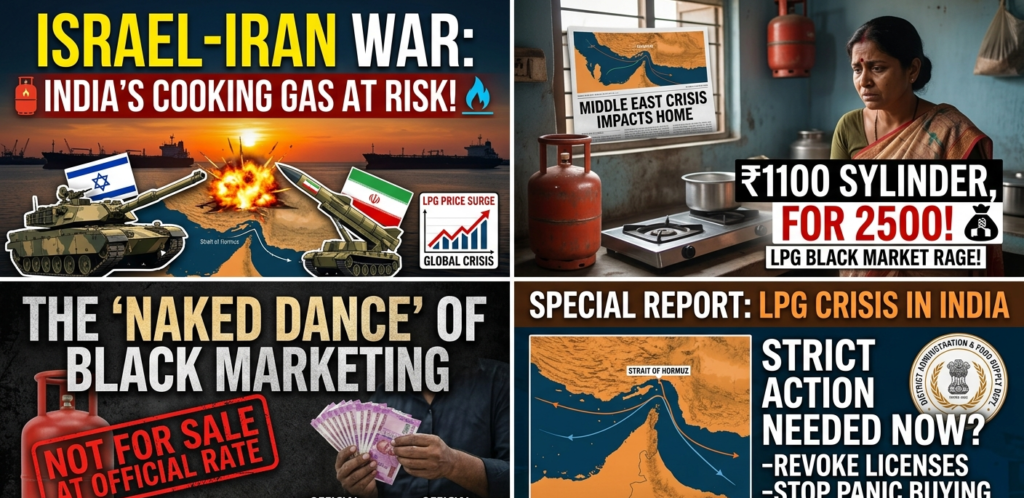
The escalating military tensions between Israel and Iran in the Middle East have not only shaken the global oil market but also directly impacted the kitchens of ordinary people in India. India imports more than half of its LPG needs, and this war has put the supply chain at complete risk.
- Supply Shortages and a Climate of Fear
Most of India’s gas imports come through the Strait of Hormuz, located near Iran. There is a fear of this sea route being closed in the event of war. This fear, combined with the possibility of further price increases in the future, has created panic in the market.
- The Naked Dance of Black Marketing
Whenever there is even a slight shortage of supply, local middlemen and some agencies begin to exploit it unduly.
Artificial Scarcity:
Despite availability of stock, a sign saying “Stock Out” is displayed to force people to pay more.
Sharp Price Surge:
A domestic cylinder, which should be available for around ₹1,100 at the official rate, is being sold for up to ₹2,500 through black marketing during this crisis.
This is a direct robbery of the common man’s pockets, where a disaster is being turned into an opportunity.
- Economic and Social Impact
When the price of a cylinder more than doubles, the entire budget of a middle-class family is disrupted.
Inflation: Gas prices also increase the cost of hotels, restaurants, and transportation.
Impact on the Poor: Those who are daily wage laborers or those with limited incomes are hit the hardest.
- Solutions and the Government’s Role
The district administration and the Food Supply Department should take strict action to stop this black marketing. The licenses of agencies that do not adhere to the ‘rate list’ should be revoked. Furthermore, the public should avoid panic-buying, as this further encourages black marketers.